JAB Media Services.com
John Albert Burnham
About JAB / Employment History / Facts
About JAB
Personal
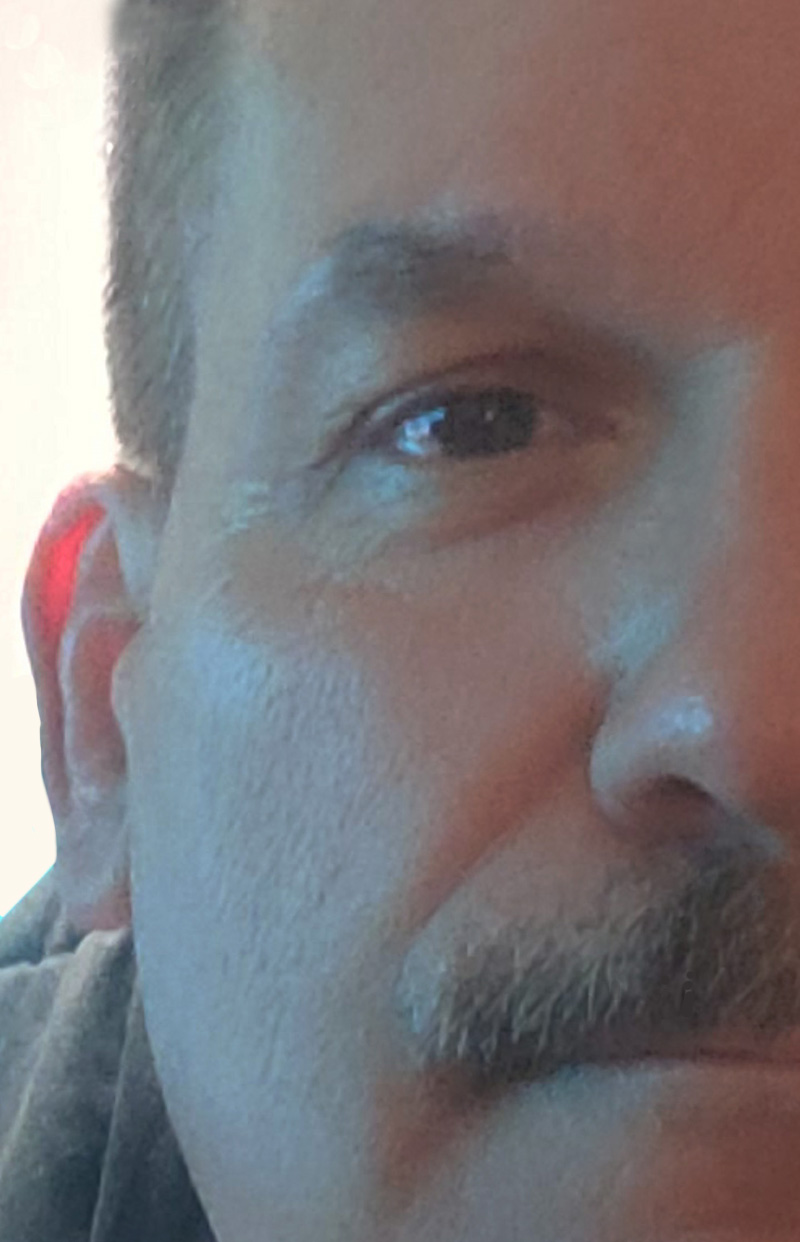
I am a single father of four adult children and a lifelong musician (drummer) who still actively performs live. Professionally, I am currently freelancing as a graphic designer, though my background includes full-time roles at several respected companies. I began my career in multimedia after graduating from the Specs Howard School of Broadcast Arts in October 1987. My first position out of school was as a production assistant at Digital Animation Corporation in Eastpointe, Michigan, which was conveniently located within walking distance of my home at the time.
John Albert Burnham
Having been given 24-hour access to the office building, I used that access wisely. I was so intrigued by the graphic computers they had that I would return to the office at night and stay there late reading manuals and pressing buttons, learning how these computers worked. I cut my teeth in animation teaching myself the Dubner CBG II 8-bit standalone 3D graphics system, considered high tech as the time, rendering frame by frame to 1" video tape! It was all new and challenging, but the effort paid off. The opportunity for a full-time job as an animator was eventually offered and I took it. The experience paved the way for many more exciting opportunities that lay ahead.
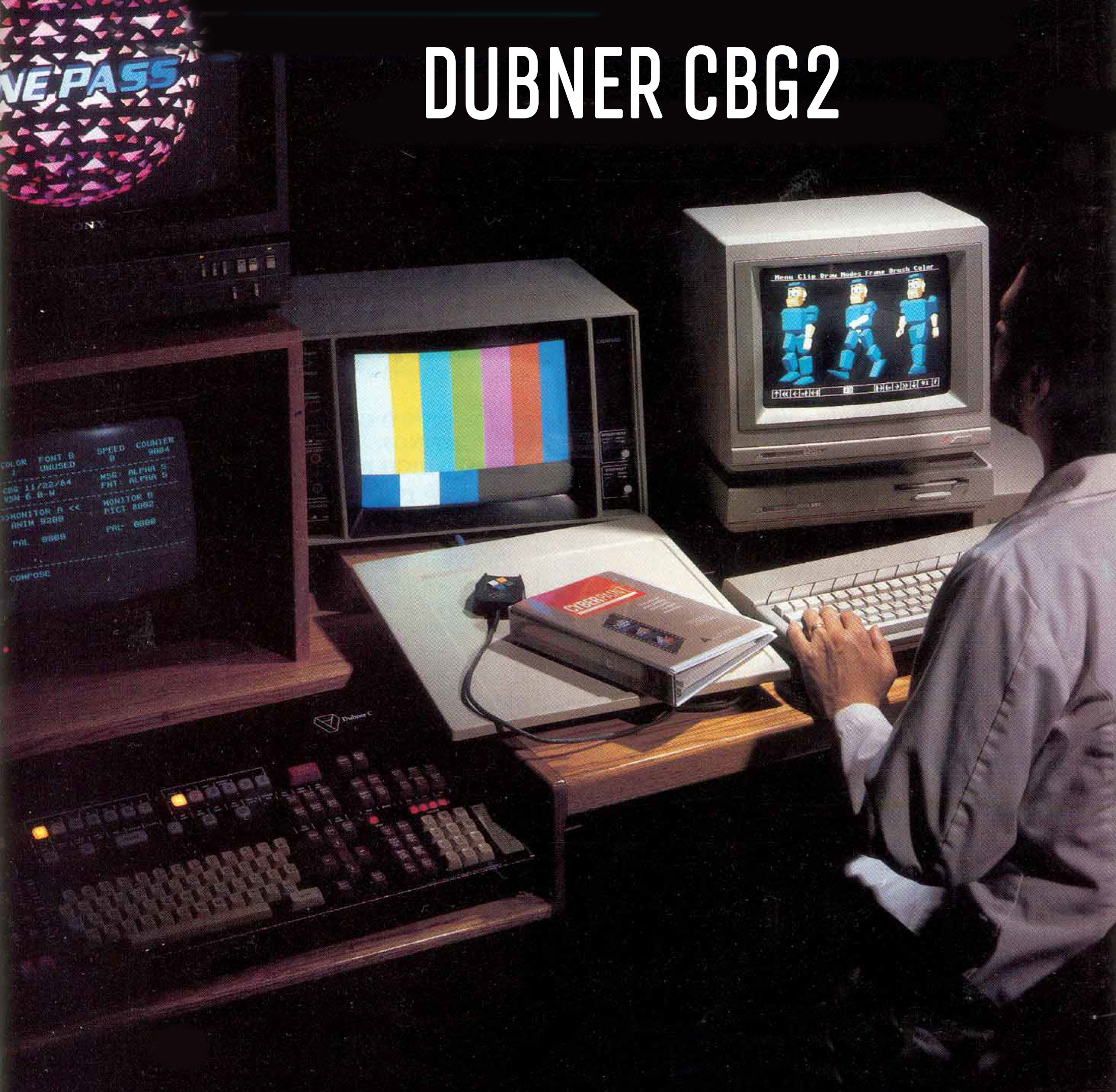
8bit Dubner CBG II - 1988
Just to be clear...
Specs Howard School got me in the door so to speak, but it taught me 0% about animation or any other technical knowledge I currently have. I do not have a degree, so I am self-taught (along with a vast history of on-the-job training). My best trait is that I'm a sponge for knowledge and I'm a quick learner.
Leaps and Bounds
Over the next 3 decades, I worked for various companies doing multimedia asset creation typically for the automotive industry. I was trained and certified as an Avid MC1000 video editor in 1999, taught myself interactive authoring using Flash and Authorware in the early 2000's, became very efficient at goby illustration creation (which also evolved into military projects) and I've created countless Photoshop style graphics. All of which have been rewarding to do, but 3D animation and rendering have always been my personal favorite. I joined Raytheon Professional Services in 2005 where the opportunity to become a 3D Maya operator opened up. Hired in as a Flash programmer, my persistence to let me animate 3D projects paid off as I soon became the #2 Maya animator for the company in 2005.
Out of all the graphical skillsets I have, the world of 3D and everything involved with it (rendering, scripting, SFX, AOV's, compositing) make up 70% of my knowledge base. I've experienced many different 3D software packages, but Autodesk Maya (especially 2020+ with Arnold) has always been my go-to program for animating and I truly love it.
The Epidemic
In 2020 when Covid-19 hit, the ability to play live music and make money doing it came to a screeching halt. Graphic work became scarce and typically remote. Things got tough and I took freelance work whenever available.
Taking the initiative
The Covid-19 downtime, as unfortunate as it was, allowed me to keep my skill levels up by taking advantage of that time and learning many newly released software packages and rendering engines. Programs such as Autodesk Maya 2020 & Arnold, Autodesk VRED, Luxion KeyShot Pro, and the Corona renderer for 3DS Max have all been added to my skillsets. As of January 2025, I have yet to use these new skillsets with a full-time employer.

A KeyShot render composite - 2025
KeyShot Pro
Out of all the new rendering software I've learned, Luxion KeyShot Pro has got to be the coolest. It is so fast, user friendly and photorealistic that it almost feels like you're cheating using it. It does animate, but there are no dynamic features. The work around is baking the keys of a dynamic Maya (or other) animation and exporting it as an alembic or FBX file with the animation information included. Importing that file into KeyShot will give you the best of both worlds!
Continued Growth:
The software used in this industry is always growing, from Houdini to Unity, to Blender and Davinci Resolve, they all have features that are worthy of learning. My goal is to eventually add these programs to my skillsets, which I am doing, but currently I am only a newb with most of them.
Previous Employers
Below is the list of full-time employers I worked for between 1988 and 2018.
• Digital Animation Corporation - 3 years
• The Ross Roy (Group) - 3 years
• Word Pictures, Inc. - 10 years
• Raytheon Professional Services - 5 years
• Team Detroit, Inc. (The Park) - 1 year
• Nissan (Virtual Garage) - 4 years
• XMCO (military) -1 year
• JAB Media Services (Freelance) - Current

Random engine rendering in Maya with Arnold.
Interesting Facts About JAB
- A 30-year career in Digital Content Creation
- 90% self-taught
- Started on an 8-bit Dubner CBG2 3D system in 1988
- Learned Maya while at Raytheon (2005)
- Performed data-pull (acquisition) (Virtual Garage)
- Worked on GM, AC Delco and SAAB (Word Pictures)
- Worked on-site on all military projects (TACOM -XMCO)
- Created animation used in the 2010 Detroit Auto show
- Learned Authorware, all CD-ROM titles (Word Pictures)
- Interfaced with Team Center at multiple employments
- Audio engineering experience - Studio / Live
- Lifelong musician (drums/vocals)
- Freelance JAB Media Services

John, pointing to the screen of a Corvette kiosk at the 2010 North American Auto show in Detroit Michigan. Traveling the path of oil inside the LS9 (Blue Devil) engine, the animation reveals how the attached sump system prevents the engine from oil starvation at high RPMs. Basically, the same method aircraft use in their engines. Created for GM while employed at Raytheon Professional services, it was a proud moment for me to have this animation be chosen for the show.
* All images shown on the site were created by John Albert Burnham either privately or from previous projects while employed.
** All images shown on the site copyright protected by the listed corporate owner. Re-use is strictly prohibited.
© Copyrights 2025 - jabmediaservices.com